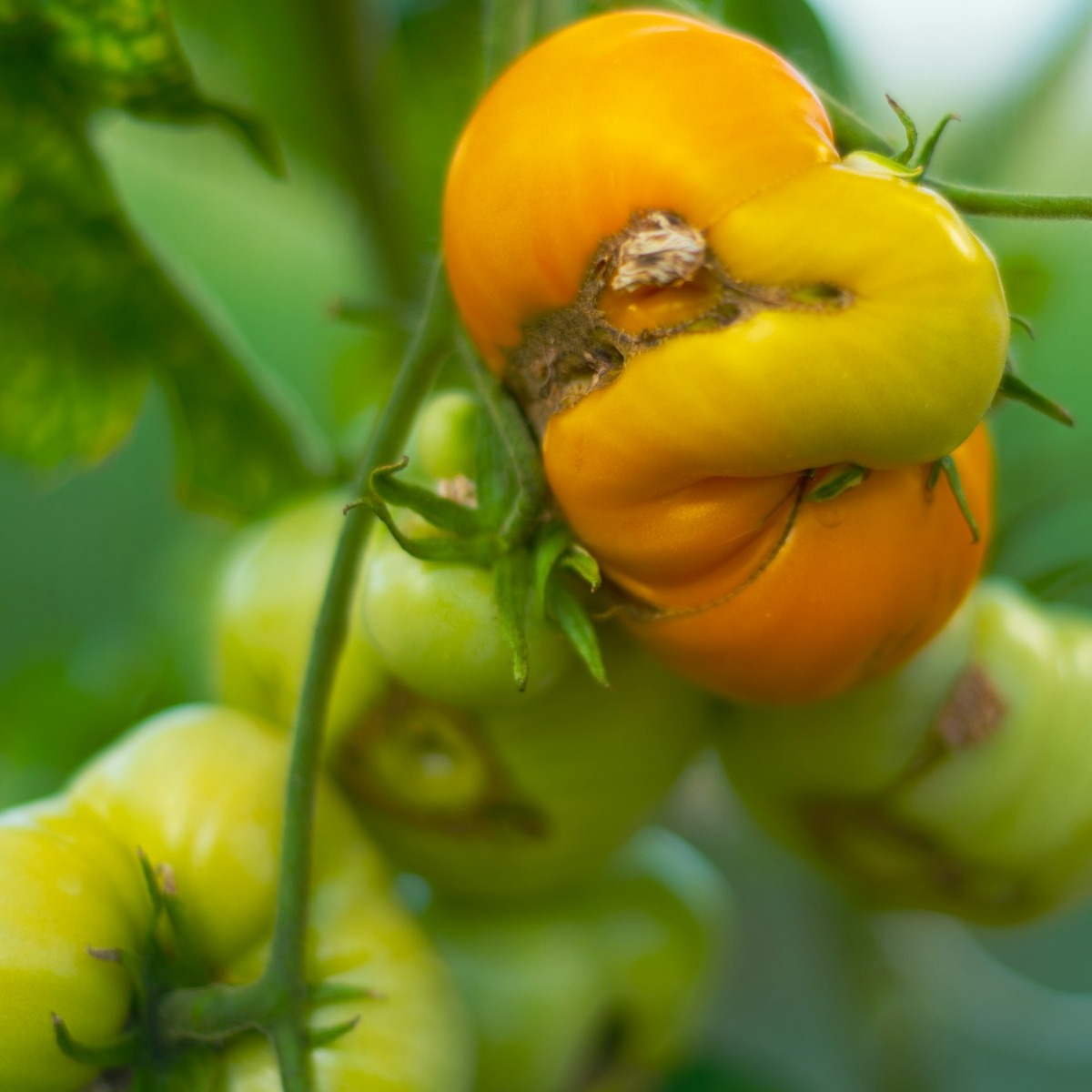
A hot, dry spell (or a hosepipe ban forcing you to ration what you've got) rarely shows up as a problem straight away. It's days or even weeks later, when the fruit itself starts telling the story, that you see the damage: blackened bases, split skins, flowers dropping instead of setting.
None of it means you've failed as a gardener. These are classic heat and water-stress problems, and almost all of them are avoidable once you know what's actually causing them.
Blossom End Rot
A dark, sunken, leathery patch at the bottom of the fruit (opposite the stem) is blossom end rot, and it's one of the most common tomato complaints in a dry summer. It also affects peppers, courgettes, and squash.
It looks like a calcium deficiency, and technically it is, but the soil usually has plenty of calcium available. The real cause is irregular watering: calcium travels through the plant dissolved in water, so when the soil dries out and then gets soaked, uptake becomes patchy and the fastest-growing fruit misses out.
The fix is consistent soil moisture, not more calcium. Water regularly rather than letting plants dry out between soakings, mulch to even out moisture levels, and go easy on high-nitrogen feed, which pushes fast leafy growth at the expense of calcium reaching the fruit. Foliar calcium sprays are widely sold but largely ineffective, since very little calcium moves back out of the leaves into developing fruit. Remove badly affected fruit and focus on keeping watering steady for the rest of the truss.
Split and Cracked Fruit
Splitting happens when the inside of the fruit swells faster than the skin can stretch, usually after a heavy watering or downpour following a dry spell. The flesh takes up water quickly; the skin, toughened by drought, can't keep up.
Consistent watering is the main defence here too: little and often (or a good deep soak on a regular schedule) avoids the extreme dry-then-soaked cycle that causes splitting. Mulching helps keep soil moisture steady between waterings. If heavy rain is forecast after a dry spell, picking any fruit that's already started to ripen reduces losses, since it will keep ripening off the plant. Some varieties are simply more crack-resistant than others, worth bearing in mind when choosing seed for next year.
Blossom Drop and Poor Fruit Set
In a heatwave, flowers can drop off without ever setting fruit. Above around 29-32°C, pollen becomes less viable and flowers are more likely to abort, and a drought-stressed plant will also shed flowers and small fruit deliberately, prioritising survival over reproduction.
There's a limit to how much you can control the weather, but consistent watering reduces the drought-stress side of the problem, and light shade netting during the worst of a heatwave can bring temperatures down enough to help fruit set continue. In greenhouses, extra ventilation and damping down the floor to raise humidity also helps. Otherwise, patience is the main tool: fruit set typically resumes once temperatures moderate, and a few weeks of drop doesn't mean the plant is finished for the season.
Sunscald
Pale, blistered, papery patches on the shoulder of the fruit facing the sun are sunscald, essentially sunburn. It happens when fruit that's used to some shade is suddenly exposed to strong direct sun, often after leaves are lost to disease, wilt in extreme heat, or get stripped away by over-enthusiastic pruning.
Avoid heavy pruning during a heatwave, even if the plant looks like it needs tidying up; those leaves are shading the fruit. If foliage is already thin, temporary shade netting over exposed trusses protects fruit until the plant recovers some cover of its own.
Building More Resilient Plants
Most of these problems trace back to the same root cause: inconsistent water. A regular, deep watering schedule that encourages roots to grow down rather than sideways copes far better with heat and short dry spells than frequent shallow watering ever will, and a thick mulch layer buys you time between waterings, which matters even more if you're working around a hosepipe ban.
Balanced feeding (not excessive nitrogen), sensible pruning that doesn't strip protective foliage in hot weather, and good airflow to keep plants healthy all help too. None of this guarantees a perfect crop in a heatwave, but it turns blossom end rot, split fruit, and dropped flowers from an inevitability into an occasional inconvenience.