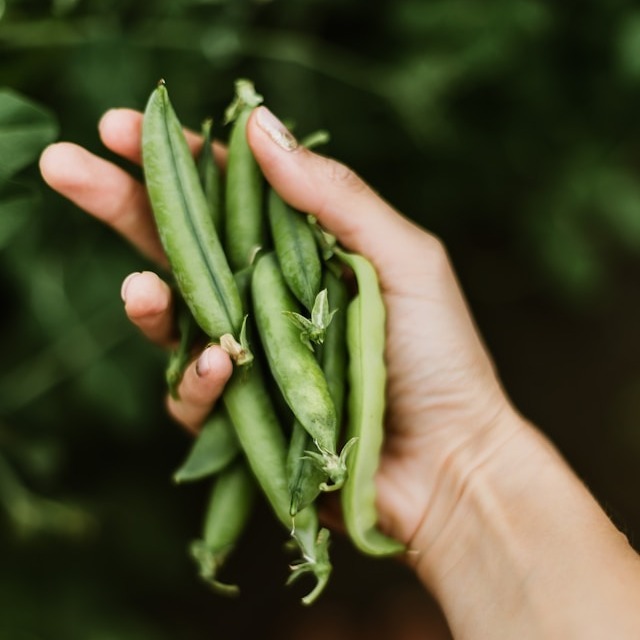
There's something deeply satisfying about growing peas. Maybe it's the sweet crunch of a pod picked fresh from the vine, or the way they scramble up supports with their delicate tendrils. But if you've only ever grown modern varieties, you're missing out on some absolute crackers. Heritage peas have been cherished by gardeners for generations, and once you've tasted them, you'll understand why.
Why Heritage Peas?
Modern peas are bred for commercial success: uniformity, disease resistance, simultaneous ripening for mechanical harvesting. All very practical, but often at the expense of flavour and character.
Heritage varieties, on the other hand, were selected by gardeners who actually ate them. They're the survivors (the varieties that tasted so good, grew so reliably, or were so beautiful that people saved the seeds year after year, sometimes for centuries). They offer flavours you simply won't find in supermarkets or modern F1 hybrids.
Plus, because they're open-pollinated, you can save seeds from your best plants and grow them again next year. No need to buy fresh every season; just keep the cycle going.
Our Top Heritage Peas
Alderman (also sold as Tall Telephone)
If you only grow one heritage pea, make it this one. Dating back to the 1890s, Alderman is a tall mainpea (it'll easily reach 1.5-2m, so give it sturdy support) with long pods packed with 8-10 large, incredibly sweet peas.
The flavour is outstanding: deep, sweet, and everything a pea should be. It's a maincrop variety, so you'll be harvesting from July onwards. The vines are prolific, the pods are easy to shell, and it's reliable even in less-than-perfect summers. Victorian gardeners knew what they were doing.
Carouby de Maussane
This French heirloom is a mangetout (eat the whole pod), and it's absolutely stunning. The plants produce beautiful purple-pink flowers followed by large, flat pods that are tender and sweet when picked young.
It's another tall one (around 1.5m), and the combination of gorgeous flowers and productive pods makes it as ornamental as it is edible. Sow in spring for summer picking, and don't let the pods get too big or they become stringy. Perfect lightly steamed or stir-fried.
Kelvedon Wonder
For those with less space or patience, Kelvedon Wonder is a compact, early variety that punches well above its weight. Introduced in the 1920s, it grows to just 45cm, so it's perfect for smaller gardens or even large pots.
Despite its size, it's incredibly productive, with well-filled pods of sweet, tender peas ready from June. It's also one of the most reliable varieties for successive sowings: sow every few weeks from March to June for continuous harvests.
Champion of England
An absolute classic, bred in the 1840s and still going strong. This is a late-season pea (harvest from August) that grows tall (around 1.5m) with slender pods containing small but intensely flavoured peas.
The taste is exceptional, with a rich, sweet flavour that modern varieties can't match. It's not the heaviest cropper, but what it lacks in quantity it makes up for in quality. If you're after the best-tasting peas for eating fresh, this is it.
Ezetha's Krombek Blauwschok
Yes, it's a mouthful, but this Dutch mangetout is worth learning to pronounce. It produces masses of purple pods with a wonderful flavour and a stunning appearance: the pods are deep purple and the flowers are bicoloured pink and purple.
Plants grow to about 75cm and are incredibly productive. The pods are best picked young and eaten whole, though you can shell them for peas if you prefer. They turn green when cooked, but raw they're a beautiful addition to salads.
Growing Tips for Heritage Peas
Timing
Most heritage peas are hardy and can be sown directly outdoors from late February to June, depending on variety. Early sowings give earlier crops but risk being hit by late frosts. Covering early sowings with cloches or fleece helps.
For the earliest crops, you can start seeds in guttering or root trainers indoors in February, then slide the whole lot out into a prepared trench in March. This gets you ahead without disturbing roots.
Support
Tall varieties need sturdy support. Pea sticks (twiggy branches), bamboo canes with netting, or even a simple frame of string work well. Get supports in place early; trying to wrangle 2m of pea vines onto canes after the fact is a nightmare.
Spacing
Peas don't need much space between plants; they support each other. Sow in double rows about 5cm apart, with 60cm between each double row. This maximizes your harvest without overcrowding.
Soil and Feeding
Peas fix their own nitrogen, so they don't need rich soil. In fact, too much nitrogen encourages leafy growth at the expense of pods. A sunny spot with reasonable drainage is all they need.
Watering
Keep them consistently moist, especially once they start flowering. Dry soil at flowering time means poor pod set. A good mulch helps retain moisture and keeps roots cool.
Saving Seeds
One of the best things about heritage peas? You can save seeds to grow again next year. Here's how:
Leave a few of your best plants to mature fully; the pods will dry and turn brown on the vine. Pick them when they're papery and you can hear the peas rattling inside. Shell them out, spread them on a tray to dry completely for a week or two, then store in a paper envelope somewhere cool and dry.
Label everything (variety, date) because you will forget. Next February, you'll have your own supply of seeds ready to sow, and you'll be part of the chain of gardeners who've kept these varieties alive.
Why It Matters
Every time you grow a heritage variety, you're doing more than just feeding yourself. You're preserving genetic diversity, keeping food history alive, and experiencing flavours that commercial agriculture has left behind.
These peas exist because generations of gardeners thought they were special enough to save. Now it's our turn to grow them, enjoy them, save seeds, and pass them on. Whether you're swapping seeds with neighbours, sharing them through Sow Revolution, or tucking a few pods away for next year, you're part of something bigger than just this season's harvest.
So this spring, give heritage peas a go. Your taste buds will thank you, and you might just discover a new favourite that's been around longer than your great-grandparents.