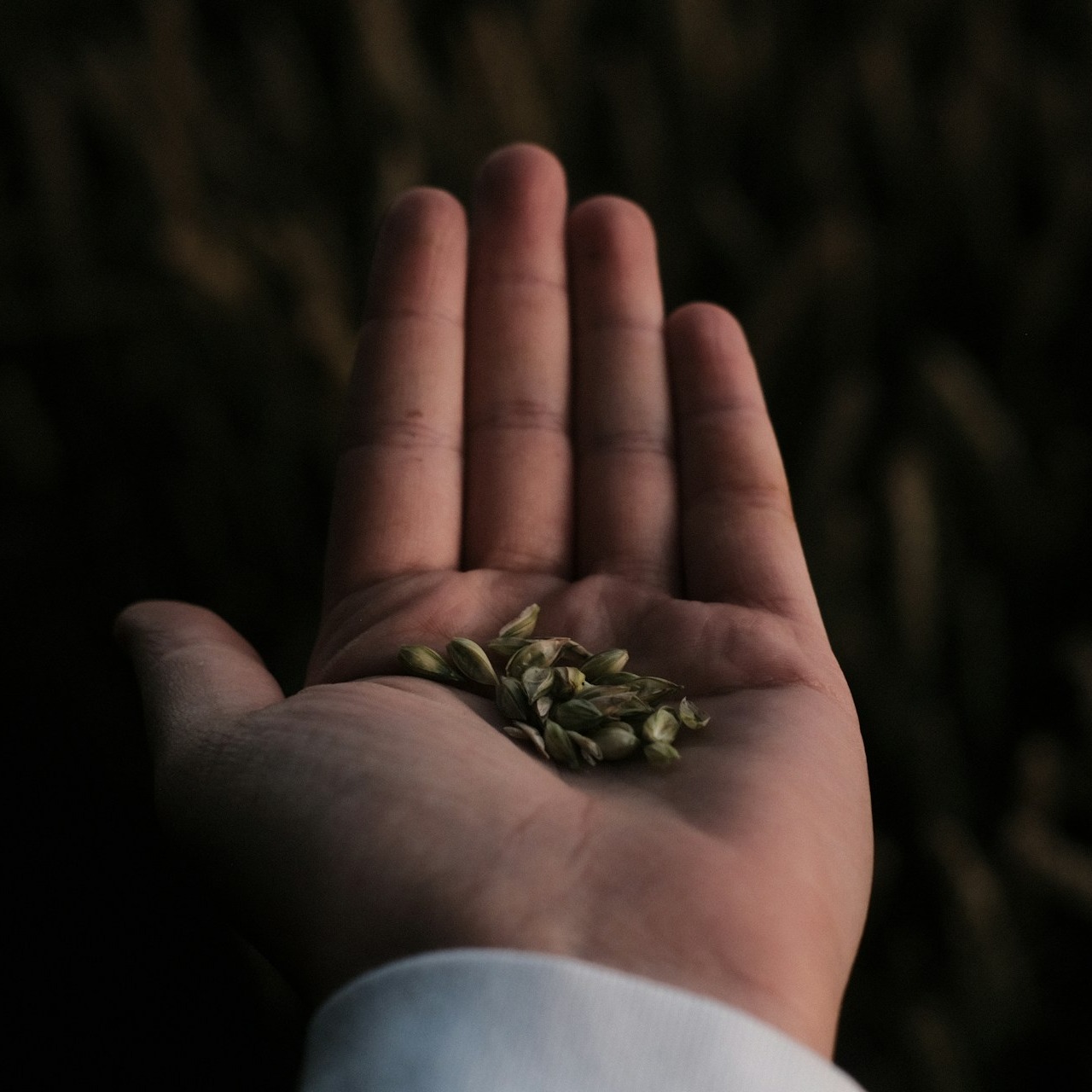
Swapping seeds has been part of gardening for generations. Long before seed catalogues, growers passed seeds over the fence, at the market, between families and down the generations. Almost every vegetable we eat today exists because someone, somewhere, saved seed and handed it on. It can look like a small thing: an envelope of beans in exchange for a few tomato seeds. But every swap does more than fill a gap in your seed tin. Here's why it matters:
1. It keeps rare varieties alive
Thousands of old vegetable varieties have disappeared from catalogues over the last century. Commercial seed ranges focus on what sells in volume, so a bean that's delicious but awkward to harvest by machine quietly drops out of sight.
Some of these varieties have been grown by the same family or village for over a century, each one shaped by the people who kept it going. Once the last seeds stop germinating, that history goes with them, and no amount of money can bring it back.
Many of those varieties survive only because home growers keep sowing them, saving them and sharing them. A variety held by one person is one bad summer away from being lost. A variety held by fifty people is much safer. Swapping is how one becomes fifty. Read more in Why Heirloom Seeds Matter.
2. It protects biodiversity
Every variety carries its own mix of genes: tolerance to cold, resistance to a disease, the ability to cope with poor soil. The wider the pool of varieties we grow, the better our gardens and our food system can adapt to whatever comes next, from new pests to wetter winters and hotter summers.
The banana industry shows what can happen when we rely too heavily on a narrow range of varieties. The Gros Michel banana once dominated the export market, until Panama disease devastated plantations and forced growers to turn to other varieties. Today, the Cavendish banana that replaced it faces its own threat from the disease.
Gardeners swapping seed are, quite literally, keeping that pool deep.
3. You get seeds that suit your conditions
Seed saved by a grower who has been sowing the same variety for years has been quietly adapting to their conditions. Each year they keep seed from the best plants, and the variety gets a little better at coping with their climate and soil.
Swap with someone growing in conditions like yours and you get the benefit of all that selection, plus their tips on how to grow it.
This matters most if you grow somewhere awkward: a windswept allotment, heavy clay, a short northern season. A tomato that has been ripening outdoors in Cumbria for ten years is far more likely to cope there than one bred for a polytunnel down south.
4. It saves money and reduces waste
Most seed packets hold far more than one household needs. You sow a dozen lettuce seeds and the rest sit in a drawer, slowly losing their oomph. Swapping turns that surplus into something new to grow, instead of something past its best in two years' time.
Swapped seed also skips the packaging and the postage. And because home-saved seed is often fresher than a packet that has sat on a shelf for a season or two, it tends to germinate well too.
We looked at the numbers in Seed Swapping vs. Buying, and the case for sharing is a strong one.
5. You discover things you'd never find in a shop
Purple-podded peas. Climbing beans grown by one family for generations. A chilli someone brought back from holiday a decade ago and has saved ever since. The most interesting seeds aren't in the garden centre, they're in other gardeners' tins.
Swapping also lets you try something new without committing to a whole packet. A pinch of seed is enough to find out whether a variety earns a place in next year's plot, and if it doesn't, you've lost nothing but a bit of space.
6. It builds community
A seed swap is never really just about seeds. It comes with stories, growing tips, and often a follow-up message months later: "How did the beans do?" Swapping connects you to people who love growing as much as you do, whether they live on your street or the other end of the country.
Plenty of lasting friendships between growers start with a single envelope. New gardeners get a friendly way in, and experienced growers get to pass on what they've learned, which is exactly how growing knowledge has always travelled.
7. It makes us more resilient
A seed collection is useful. A network of seed collections is far stronger. If your crop fails, someone else's didn't. If a variety you love is discontinued, someone still has it. We wrote about this in Stocking Up? Don't Forget the Seeds: resilience is better shared.
The more gardens a variety lives in, the less any one setback matters, whether that's a late frost, a bad year for slugs or a seed company going out of business.
Start swapping
You don't need to be an expert seed saver to join in. Half-used shop-bought packets are a perfect place to start. Go along to a seed swap event near you, or list your spare seeds on Sow Revolution and swap with growers any time of year.
If you'd like to save your own seed, start with easy crops like peas, beans and tomatoes. They mostly pollinate themselves, so the seed you save grows true to the parent plant. Just avoid F1 hybrids, which won't come true from seed.
Every swap, however small, keeps a little more diversity growing.